
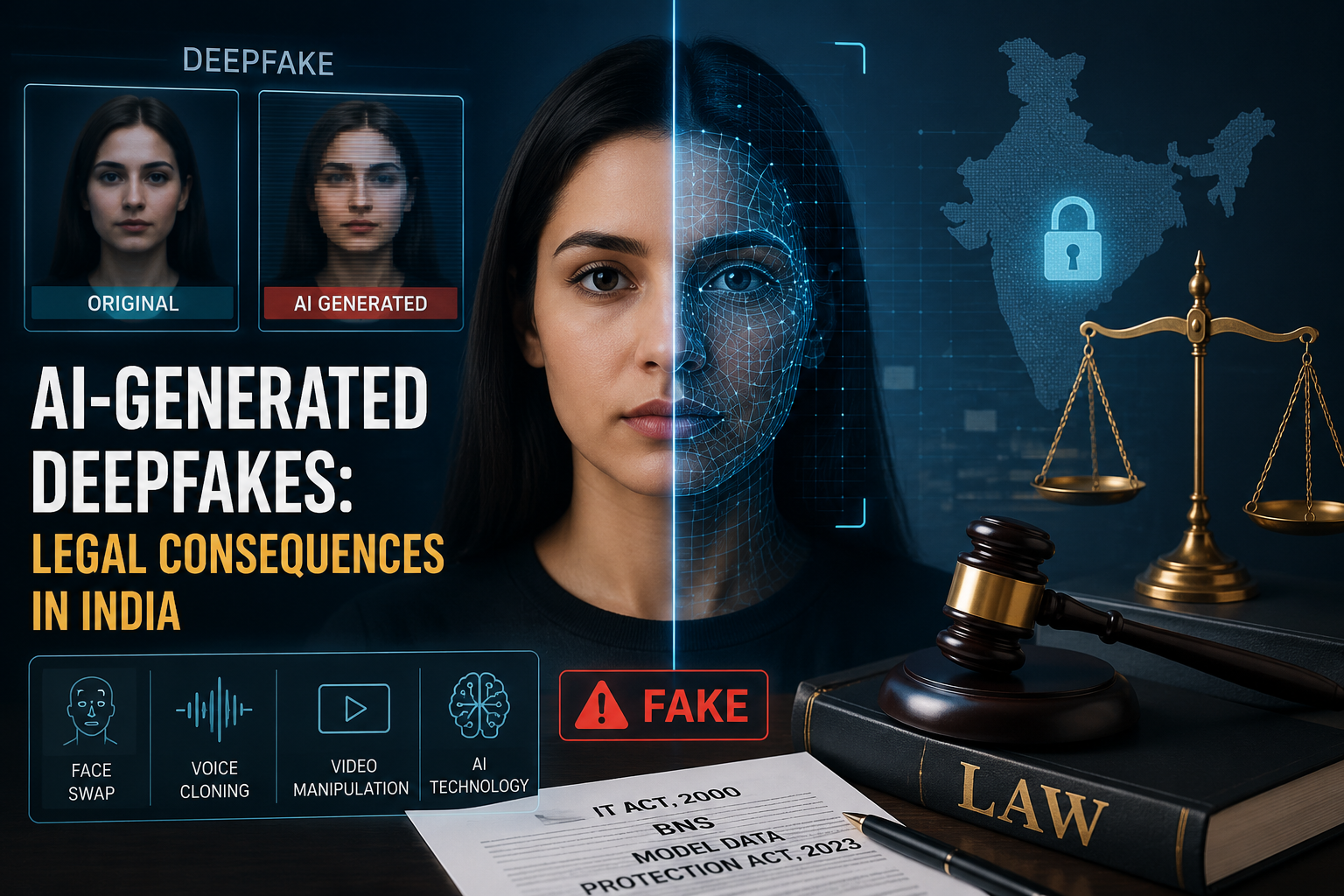
Artificial Intelligence (AI) has revolutionized content creation, making it possible to generate highly realistic images, videos, and voice recordings within minutes. While AI offers numerous benefits across industries, it has also led to the rapid rise of AI-generated deepfakes—digitally manipulated media designed to look or sound authentic.
Deepfakes are increasingly being used for identity theft, online fraud, political misinformation, cyberbullying, and non-consensual explicit content. As these technologies become more accessible, understanding their legal implications is crucial for individuals, businesses, and content creators.
In this guide, we explain what deepfakes are, whether they are illegal in India, the laws that apply, and the legal remedies available to victims.
What Are AI-Generated Deepfakes?
A deepfake is a photo, video, or audio recording that has been altered using artificial intelligence and deep learning technology to imitate a real person's appearance or voice. These manipulated files can be so convincing that they are often difficult to distinguish from genuine content.
Deepfakes may be created for entertainment or educational purposes, but when used to deceive, harass, defraud, or damage someone's reputation, they can lead to serious legal consequences.
Common examples include:
Fake videos of public figures making false statements
AI-generated voice calls used in financial scams
Morphed intimate images or videos shared without consent
Fraudulent business communications using cloned voices
Manipulated political speeches designed to spread misinformation
Are Deepfakes Illegal in India?
India does not yet have a dedicated law specifically regulating deepfake technology. However, this does not mean deepfakes are legal in every situation.
The legality depends on how the deepfake is created, shared, and used. If it involves fraud, impersonation, defamation, identity theft, obscenity, or privacy violations, existing Indian laws can be invoked against the offender.
Therefore, anyone who creates or distributes harmful deepfake content may face both civil and criminal liability.
Laws Applicable to Deepfake Cases in India
Several legal provisions may apply depending on the nature of the offence.
1. Information Technology Act, 2000
The Information Technology Act contains provisions relating to cyber offences, identity theft, privacy violations, and the publication or transmission of obscene or sexually explicit electronic content.
Individuals responsible for creating or circulating malicious deepfakes online may be prosecuted under relevant provisions of the Act.
2. Bharatiya Nyaya Sanhita (BNS)
The Bharatiya Nyaya Sanhita (BNS), which replaced the Indian Penal Code, includes offences such as:
Cheating
Forgery
Criminal intimidation
Defamation
Personation
Publication of false information
Identity-related offences
If a deepfake is used to deceive, extort, or damage someone's reputation, criminal charges may arise under these provisions.
3. Digital Personal Data Protection Act, 2023
If a person's image, voice, or personal data is misused without consent, issues relating to data privacy and unlawful processing of personal data may also arise under the Digital Personal Data Protection Act, 2023, depending on the facts of the case.
Legal Consequences of Creating or Sharing Deepfakes
The consequences depend on the purpose and impact of the deepfake. A person found responsible may face:
Criminal prosecution
Imprisonment under applicable laws
Monetary fines
Civil lawsuits for damages
Court orders directing removal of the content
Compensation claims by victims
Permanent reputational damage
Courts generally consider factors such as malicious intent, financial gain, public impact, and the extent of circulation before determining liability.
Common Crimes Involving Deepfakes
Deepfake technology has become a tool for various cybercrimes, including:
Identity Theft
Criminals may impersonate another individual using AI-generated videos or cloned voices to obtain money or sensitive information.
Financial Fraud
Businesses are increasingly targeted through fake voice calls or videos that appear to come from senior executives, instructing employees to transfer funds.
Non-Consensual Explicit Content
One of the most harmful uses of deepfakes involves creating intimate images or videos without a person's knowledge or consent. Victims often experience severe emotional distress and reputational harm.
Defamation
Manipulated videos portraying someone committing illegal or unethical acts can seriously damage personal and professional reputations.
Election Misinformation
Deepfakes may also be used to spread false political messages, influence public opinion, or disrupt democratic processes.
What Should Victims Do?
If you become the victim of a deepfake, acting quickly can help minimise the damage.
You should:
Save screenshots, videos, URLs, and other digital evidence.
Avoid sharing or forwarding the manipulated content.
Report the content to the relevant social media platform.
File a complaint with the National Cyber Crime Reporting Portal or your local cyber police station.
Lodge an FIR if criminal offences such as fraud, extortion, or defamation are involved.
Consult an experienced lawyer to seek injunctions, content removal, and compensation where applicable.
Prompt legal action can prevent wider circulation and strengthen your case.
How Can Businesses Protect Themselves?
Organizations should adopt proactive measures to reduce the risk of AI-enabled fraud, including:
Employee awareness and cybersecurity training
Multi-factor authentication for financial approvals
Independent verification of payment instructions
AI detection tools for suspicious media
Strong internal cybersecurity policies
These safeguards can significantly reduce exposure to deepfake-related scams.
Conclusion
AI-generated deepfakes present one of the most significant legal and cybersecurity challenges of the digital era. Although India does not yet have a standalone law governing deepfakes, existing legislation provides multiple legal remedies where AI-generated content is used for fraud, impersonation, defamation, privacy violations, or other unlawful purposes.
Individuals and businesses should remain vigilant, verify suspicious digital communications, and act promptly if they encounter manipulated content. If you have been affected by a deepfake or require legal assistance regarding cybercrime, online defamation, or digital privacy violations, seeking timely legal advice can help protect your rights and pursue appropriate legal remedies.