
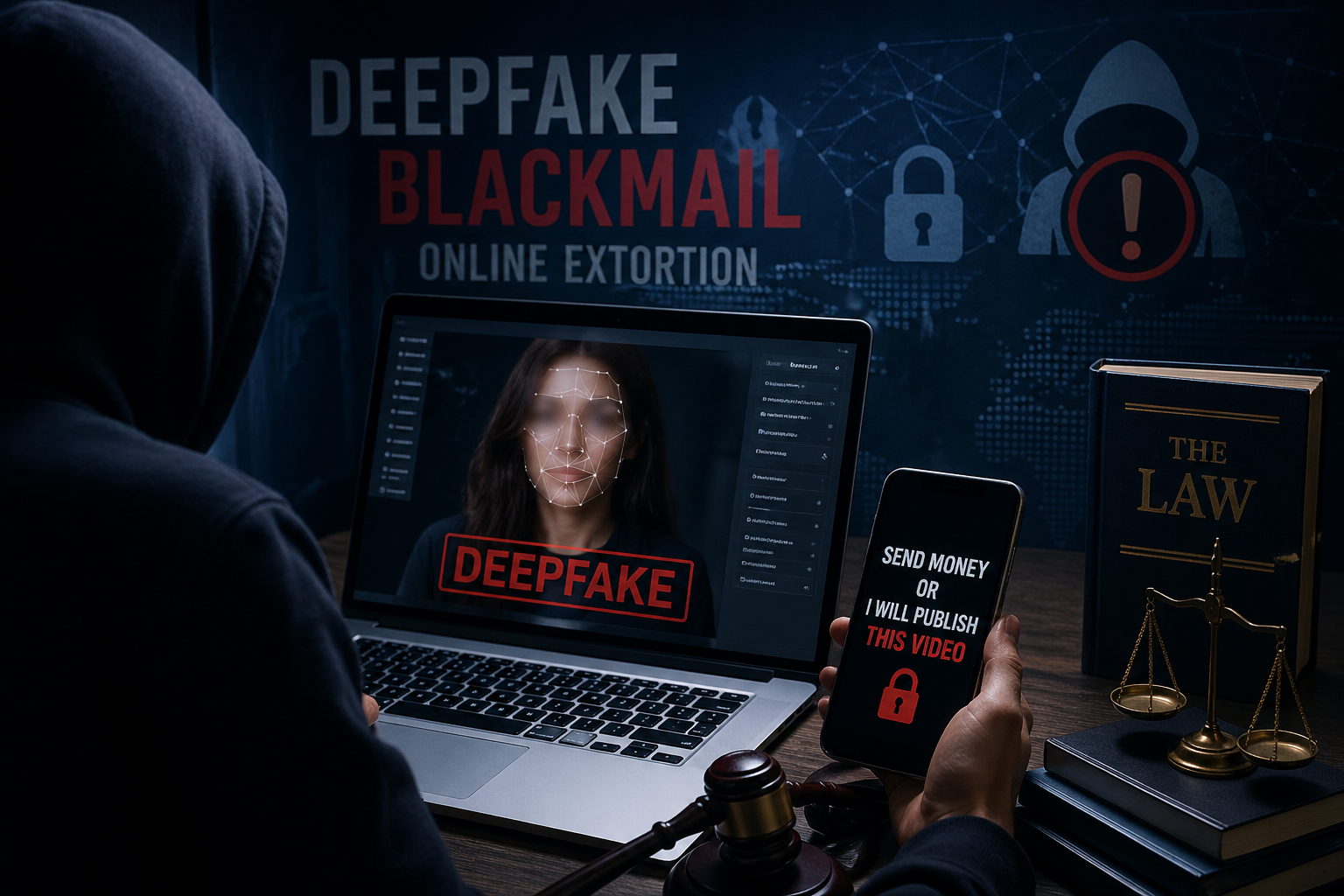
Artificial intelligence has transformed the digital world, but it has also created new forms of cybercrime. One of the most dangerous emerging threats is deepfake blackmail. Across India, cases are increasing where fraudsters use AI tools to create fake videos, images, or audio clips and then use them for extortion, defamation, or harassment.
Victims often receive threats demanding money in exchange for not publishing fake explicit content online. These incidents can cause emotional stress, reputational damage, and financial loss.
If you are facing a deepfake blackmail case in India, understanding your legal rights and taking immediate action is crucial.
What Is Deepfake Blackmail?
A deepfake is digitally manipulated content created using artificial intelligence to make a person appear to say or do something they never did.
In deepfake blackmail cases, criminals may create:
Fake explicit videos
Edited intimate photographs
Fake voice recordings
False social media content
Morphed images for extortion
The purpose is usually to pressure the victim into paying money, sharing private information, or complying with demands.
This form of cybercrime has become increasingly common due to the easy availability of AI-based editing tools.
How Deepfake Blackmail Usually Happens
Deepfake blackmail generally follows a pattern:
1. Collection of Images or Videos
Fraudsters collect photos from:
Instagram
Facebook
LinkedIn
WhatsApp
Public profiles
2. AI Manipulation
Using AI tools, they create fake content that appears authentic.
3. Threats and Extortion
Victims receive messages such as:
“Pay now or we will send this video to your family.”
“Transfer money or we will post this online.”
4. Repeated Demands
Even after payment, blackmail often continues.
This is why legal action should begin immediately.
Is Deepfake Blackmail Illegal in India?
Yes. Deepfake blackmail is illegal and punishable under Indian law.
Depending on the case, multiple legal provisions may apply.
Information Technology Act
The IT Act covers:
Publishing obscene material
Privacy violations
Identity misuse
Cyber harassment
Bharatiya Nyaya Sanhita (BNS)
Criminal charges may include:
Extortion
Criminal intimidation
Defamation
Cheating
Forgery
If intimate content is involved, the offence becomes more serious.
What To Do If Someone Is Blackmailing You Using Deepfake Content
If you are a victim of AI-generated blackmail in India, act quickly.
1. Do Not Panic
Fraudsters use fear as their main weapon. Avoid impulsive decisions.
2. Do Not Pay Money
Paying usually encourages more blackmail.
3. Save Evidence
Take screenshots of:
Chats
Phone numbers
Emails
Payment demands
Fake content links
Evidence is important for FIR and investigation.
4. Report to Cyber Crime Portal
File a complaint on the National Cyber Crime Reporting Portal.
Choose the category related to cyber blackmail or online harassment.
5. File an FIR
Visit your local police station or cyber cell.
Provide:
Screenshots
URLs
Account details
Contact numbers
Social media profiles
6. Contact a Cyber Crime Lawyer
A lawyer can help in:
Filing legal complaints
Sending takedown notices
Court petitions
Protecting your rights
Can Deepfake Content Be Removed From the Internet?
Yes, in many cases.
A lawyer can help send urgent takedown requests to:
Instagram
Facebook
YouTube
Telegram
X (Twitter)
Google
Fast action improves the chance of removing content before it spreads.
If platforms do not act, legal remedies are available.
Can Police Trace Deepfake Blackmailers?
Yes, police and cybercrime units can trace offenders through:
IP addresses
Device logs
Payment trails
Social media accounts
Email records
Even if fake accounts are used, digital evidence often helps investigators identify suspects.
Cross-border investigations may take longer, but tracing is possible.
What If the Blackmailer Is Someone You Know?
Many deepfake blackmail cases involve:
Ex-partners
Friends
Colleagues
Known contacts
In such situations, legal action can be stronger because identification becomes easier.
Victims should avoid private negotiations and proceed through legal channels.
How To Protect Yourself From Deepfake Blackmail
Prevention is important.
Follow these steps:
Keep Social Media Private
Limit public access to personal images.
Avoid Sharing Sensitive Content
Never share intimate photos or videos online.
Enable Two-Factor Authentication
Protect accounts from hacking.
Monitor Online Presence
Search your name regularly.
Report Fake Profiles Quickly
Immediate reporting can prevent misuse.
Can You Sue for Compensation?
Yes.
Apart from criminal action, victims may pursue civil remedies for:
Reputation damage
Mental harassment
Financial loss
A legal strategy depends on the facts of the case.
Why Legal Help Matters in Deepfake Blackmail Cases
Deepfake blackmail cases move fast. The longer you wait, the higher the risk of public circulation.
An experienced cybercrime lawyer can help with:
FIR drafting
Legal notices
Emergency court relief
Content removal
Police follow-up
Recovery strategy
Quick legal intervention can stop escalation and protect your reputation.
Final Thoughts
Deepfake blackmail is one of the fastest-growing cyber threats in India. With AI making fake content look real, victims are increasingly becoming targets of extortion and online abuse.
The most important thing to remember is this: do not pay, preserve evidence, and act legally.
If you are facing a deepfake blackmail case in India, immediate legal advice and cybercrime action can make a major difference in protecting your identity, reputation, and peace of mind.
Seeking timely legal support is often the fastest path toward stopping the blackmailer and restoring control.