
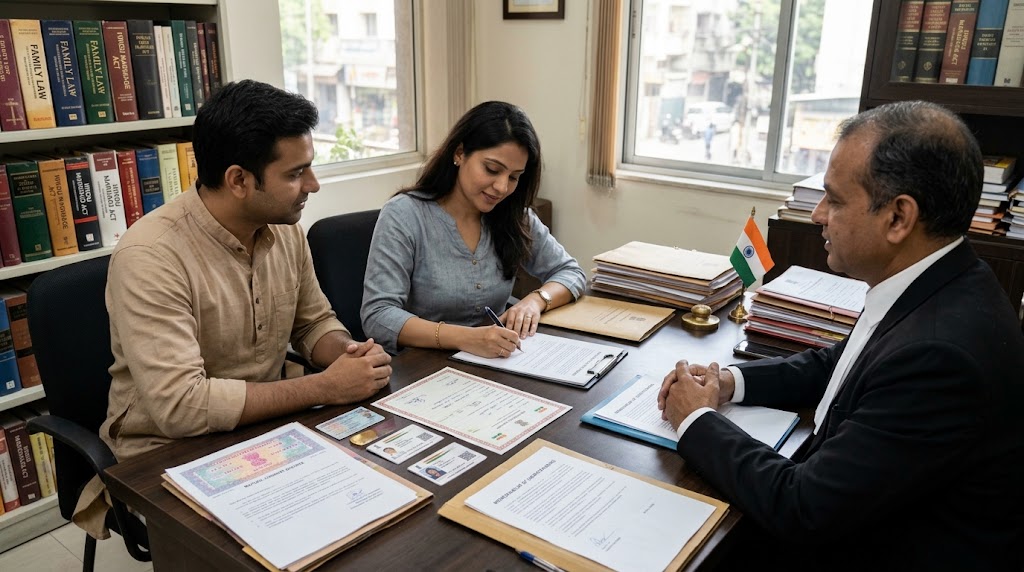
Ending a marriage is a significant personal decision, and the legal process can sometimes feel complicated. When both spouses agree that continuing their marriage is no longer possible, divorce by mutual consent offers a more cooperative way to legally separate. It allows couples to resolve important matters, including financial arrangements, child custody, and property-related concerns, before approaching the court.
Understanding the process of mutual consent divorce in India can help couples make informed decisions, prepare the necessary documents, and avoid unnecessary legal complications.
What Is Divorce by Mutual Consent in India?
Divorce by mutual consent is a legal process in which both husband and wife jointly agree to dissolve their marriage. Instead of pursuing a contested divorce involving disputes and allegations, both parties approach the appropriate family or district court with a joint petition.
Under Section 13B of the Hindu Marriage Act, 1955, eligible couples married under the Act can seek divorce by mutual consent. Section 28 of the Special Marriage Act, 1954, also provides a similar process for marriages governed by that legislation.
The process generally requires both spouses to confirm that they have been living separately, cannot continue living together, and have mutually decided to end their marriage.
Eligibility Requirements for Mutual Consent Divorce
Before filing a mutual consent divorce petition, couples should understand the basic legal requirements.
The main conditions under Section 13B of the Hindu Marriage Act include:
Living Separately: Both spouses must have lived separately for at least one year before filing the joint petition.
Inability to Live Together: The couple must have reached the understanding that continuing their marital relationship is not possible.
Mutual Agreement: Both husband and wife must voluntarily agree to dissolve their marriage.
Court Satisfaction: The court must be satisfied that the marriage took place and the statements made in the petition are genuine.
The meaning of living separately does not necessarily require spouses to live at different addresses. The circumstances of their relationship and whether they have been living as a married couple are relevant.
The applicable legal requirements may differ depending on the marriage law governing the couple.
Step-by-Step Procedure for Mutual Consent Divorce in India
Understanding the divorce procedure helps couples prepare for each stage and avoid unnecessary delays.
1. Discuss and Settle Important Matters
Before approaching the court, both spouses should discuss important issues related to their separation. These may include:
Permanent alimony or maintenance.
Child custody and visitation arrangements.
Financial responsibilities towards children.
Division or settlement of jointly owned property.
Return of personal belongings and jewellery.
Withdrawal or settlement of pending legal cases, where applicable.
Reaching a clear agreement before filing the petition can make the legal process more straightforward.
2. Prepare and File the Joint Divorce Petition
Both spouses, usually with the assistance of their legal representatives, prepare a joint petition explaining their decision to seek divorce.
The petition generally includes marriage details, the period of separation, reasons for the decision, and agreed settlement terms.
The joint petition is submitted before the court having appropriate jurisdiction.
3. First Motion and Court Appearance
After filing the petition, both spouses may be required to appear before the court for the first motion.
The judge examines the petition, verifies the identities of the parties, and confirms that their consent is voluntary. The court may also consider whether the settlement arrangements are genuine and fair.
If the legal requirements are satisfied, the court records the first motion.
4. Cooling-Off Period
Under Section 13B(2) of the Hindu Marriage Act, a six-month waiting period generally applies after the first motion before the second motion can be made.
However, this waiting period is not compulsory in every case. In Amardeep Singh v. Harveen Kaur (2017), the Supreme Court held that courts may waive the six-month period in appropriate circumstances.
The court considers factors such as the duration of separation, unsuccessful reconciliation efforts, and whether financial, custody, and other disputes have been genuinely resolved.
5. Second Motion and Final Divorce Decree
After the applicable waiting period, both spouses appear for the second motion and confirm their decision to proceed with the divorce.
The court examines the settlement and verifies that both parties continue to consent. If satisfied, it grants a divorce decree, legally dissolving the marriage.
Documents Required for Mutual Consent Divorce
Preparing the necessary paperwork in advance can help avoid delays during the proceedings.
Commonly required documents include:
Marriage certificate or other acceptable proof of marriage.
Identity and address proof of both spouses.
Recent passport-sized photographs.
Proof of the period of separation, where required.
Joint divorce petition.
Details of children, if applicable.
Written settlement agreement covering maintenance, custody, and property arrangements.
Details of pending legal proceedings, if any.
Financial documents where relevant to maintenance or settlement claims.
The exact document requirements may vary depending on the court and circumstances of the case.
How Long Does Mutual Consent Divorce Take in India?
The duration depends on the applicable marriage law, court workload, documentation, and individual circumstances.
Under the Hindu Marriage Act, the second motion is generally made no earlier than six months and no later than eighteen months after filing the first petition. The court may waive the six-month waiting period in suitable cases.
However, couples should understand that a waiver is discretionary and is not automatically granted. Court scheduling and other procedural requirements can also affect the overall timeline.
Why Legal Guidance Matters During Mutual Consent Divorce
Although mutual consent divorce is generally less adversarial than contested divorce, it still involves important legal and financial decisions.
Professional legal guidance can help couples prepare accurate petitions, draft clear settlement agreements, understand maintenance obligations, and address child custody arrangements.
An experienced family lawyer can also explain the applicable marriage law and help ensure that the proceedings follow the correct legal procedure.
Conclusion
Divorce by mutual consent provides a structured legal option for couples who have jointly decided to end their marriage. By understanding the eligibility requirements, preparing the necessary documents, and resolving important financial and family matters, spouses can approach the process with greater clarity.
Whether the matter involves maintenance, child custody, or property settlements, obtaining appropriate legal guidance can help protect both parties' interests throughout the proceedings.
Shield Law Firm aims to help individuals understand their legal rights and navigate family law matters with informed guidance and professional support.