
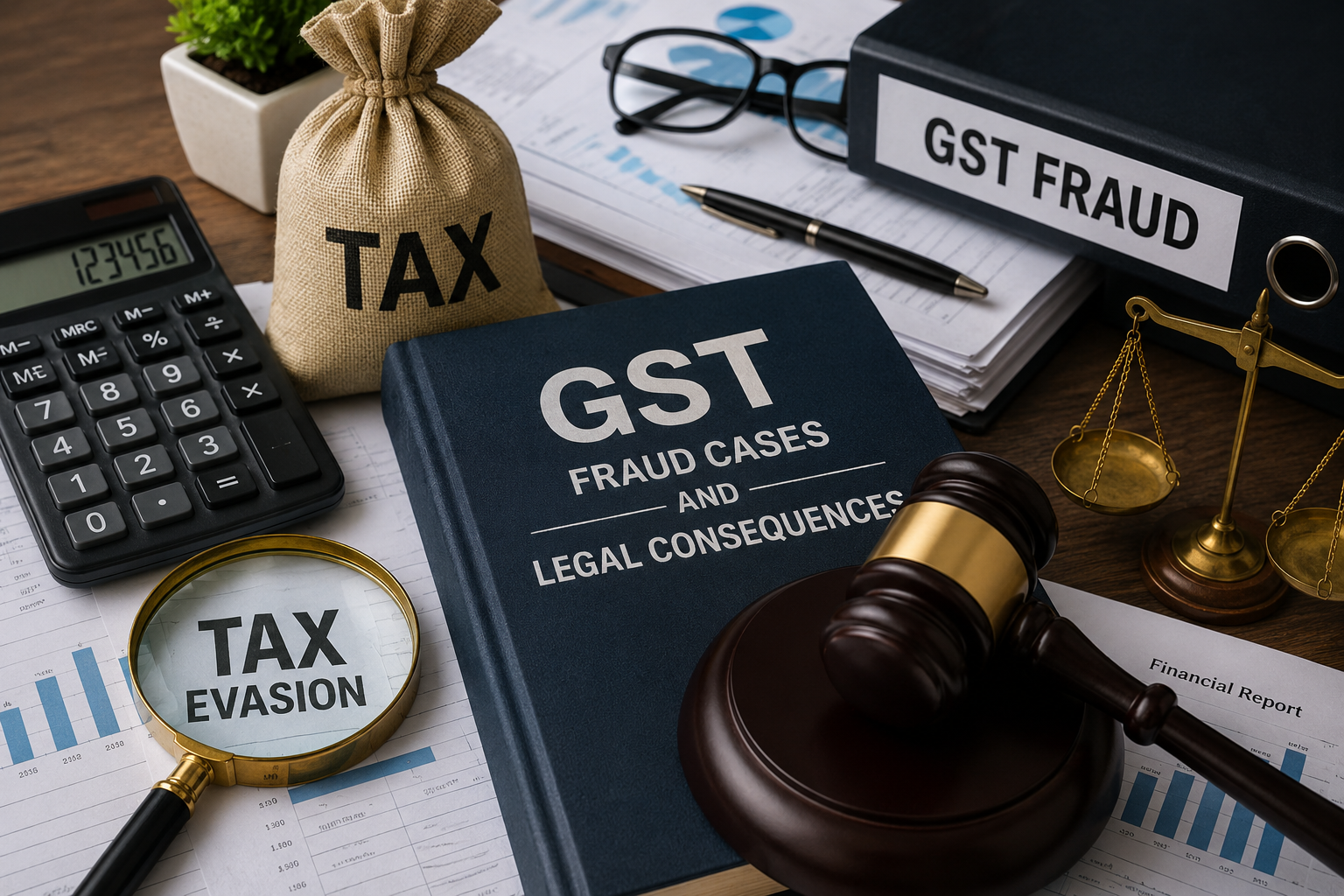
Goods and Services Tax (GST) has transformed India's taxation system by creating a unified indirect tax framework. While GST has simplified taxation for businesses, it has also given rise to various forms of tax fraud. Authorities have significantly increased scrutiny of fraudulent GST activities, making compliance more important than ever.
Whether you are a business owner, director, accountant, or entrepreneur, understanding GST fraud cases and their legal consequences is essential to avoid severe penalties, prosecution, and reputational damage.
What Is GST Fraud?
GST fraud refers to any intentional act designed to evade taxes, claim unlawful benefits, or manipulate GST records for financial gain. Such activities violate the provisions of the GST Act and can result in both civil and criminal liability.
Tax authorities use advanced data analytics, invoice matching systems, and digital audits to detect suspicious transactions and fraudulent activities.
Common Types of GST Fraud in India
1. Fake Invoice Fraud
One of the most common GST frauds involves issuing invoices without the actual supply of goods or services.
Fraudsters create fake transactions to:
Claim Input Tax Credit (ITC)
Reduce tax liability
Inflate business expenses
The government has been actively targeting fake invoice networks across India.
2. Fraudulent Input Tax Credit Claims
Businesses sometimes claim ITC based on fictitious invoices or transactions that never occurred.
Examples include:
Claiming credit from non existent suppliers
Using forged GST invoices
Claiming excess tax credits
Wrongful ITC claims can trigger audits and investigations by GST authorities.
3. Fake GST Registration
Some individuals obtain GST registrations using forged documents or stolen identities.
These registrations are often used to:
Generate fake invoices
Facilitate tax evasion
Conduct financial fraud
Such activities may also attract charges under criminal laws beyond GST provisions.
4. Underreporting Sales
Certain businesses intentionally suppress sales figures to reduce GST liability.
Common methods include:
Maintaining parallel accounts
Cash transactions without invoices
Concealing revenue
Authorities frequently compare banking records, e way bills, and GST returns to identify discrepancies.
5. Circular Trading Schemes
Circular trading involves multiple entities creating fake transactions among themselves without actual movement of goods.
The objective is usually to generate fraudulent Input Tax Credit and evade taxes.
These schemes often involve complex corporate structures and shell companies.
How GST Fraud Is Detected
The GST system is increasingly technology driven.
Authorities use various methods to identify fraud, including:
Invoice matching systems
Data analytics
E way bill verification
Bank transaction analysis
GST return scrutiny
Surprise inspections and audits
The integration of financial and tax databases makes it difficult to conceal fraudulent activities for extended periods.
Legal Framework Governing GST Fraud
GST fraud cases are primarily governed by:
Central Goods and Services Tax Act, 2017
Integrated Goods and Services Tax Act, 2017
State GST Acts
Prevention of Money Laundering Act (PMLA) in certain cases
Indian Penal Code and Bharatiya Nyaya Sanhita provisions where applicable
Depending on the nature of the fraud, multiple legal proceedings may be initiated simultaneously.
Penalties for GST Fraud
The GST Act provides strict penalties for fraudulent conduct.
Monetary Penalties
Businesses found guilty of GST violations may face:
Recovery of unpaid tax
Interest on outstanding dues
Penalties equal to or exceeding the tax amount involved
In many cases, the financial impact can be substantial.
Cancellation of GST Registration
Authorities may suspend or cancel GST registration if they discover:
Fake business operations
Fraudulent transactions
Repeated compliance violations
Loss of GST registration can severely disrupt business operations and customer relationships.
Arrest and Criminal Prosecution
Serious GST fraud cases can result in arrest and criminal prosecution.
Offences involving large scale tax evasion, fake invoicing, or fraudulent ITC claims are treated particularly seriously.
Depending on the amount involved, imprisonment may extend up to five years under the GST Act.
Criminal proceedings can be initiated against:
Company directors
Partners
Key managerial personnel
Individuals directly involved in fraudulent activities
Director and Management Liability
Many business owners mistakenly believe that corporate structures provide complete protection from personal liability.
In reality, authorities can investigate directors and management personnel if evidence suggests:
Active participation in fraud
Knowledge of fraudulent activities
Failure to exercise due diligence
This is particularly relevant in cases involving shell companies and organized invoice fraud networks.
Impact on Businesses
GST fraud allegations can have consequences far beyond financial penalties.
Operational Challenges
Businesses may face:
Frozen bank accounts
Tax audits
Document seizures
Business disruption
Reputational Damage
Allegations of tax fraud can negatively affect:
Customer trust
Investor confidence
Banking relationships
Business partnerships
For many companies, reputational losses may exceed direct financial penalties.
What Should Businesses Do If They Receive a GST Notice?
Receiving a GST notice does not automatically mean guilt.
However, businesses should take immediate action.
Recommended Steps
Review the notice carefully.
Gather all supporting documents.
Reconcile invoices and tax returns.
Respond within prescribed deadlines.
Consult an experienced tax or legal professional.
Cooperate with lawful investigations.
Ignoring notices can worsen legal exposure and increase penalties.
Preventing GST Fraud Risks
Businesses can significantly reduce risks through strong compliance practices.
Best Practices Include:
Conduct supplier due diligence.
Verify GST registrations regularly.
Maintain accurate records.
Perform periodic internal audits.
Reconcile GST returns consistently.
Train employees on compliance requirements.
Monitor unusual financial transactions.
A proactive compliance strategy is often the best defense against regulatory action.
Conclusion
GST fraud cases have become a major focus area for tax authorities in India. With increasing digital surveillance, data analytics, and inter agency cooperation, fraudulent GST activities are more likely to be detected than ever before.
Businesses must understand the legal consequences of fake invoicing, fraudulent Input Tax Credit claims, underreporting sales, and other GST violations. The penalties can include substantial fines, cancellation of GST registration, criminal prosecution, and even imprisonment.
By maintaining robust compliance systems, conducting regular audits, and responding promptly to regulatory notices, businesses can minimize legal risks and operate confidently within India's GST framework.