Buying a property is one of the biggest financial decisions you'll ever make. Whether you're purchasing a home, commercial space, or investment property, verifying the property's legal documents is essential. Property fraud, forged ownership papers, undisclosed disputes, and illegal constructions can lead to significant financial losses and lengthy legal battles.
Before signing any agreement or making payment, every buyer should perform proper legal due diligence. This guide explains how to verify property documents before buying in India and the legal precautions every buyer should take.
Why Property Document Verification Is Important
Property verification helps ensure that:
The seller is the lawful owner.
The property is free from legal disputes.
There are no outstanding loans or mortgages.
Government approvals have been obtained.
The title is clear and marketable.
You won't face ownership challenges after purchase.
Skipping this process may expose buyers to fraud, litigation, or even cancellation of the transaction.
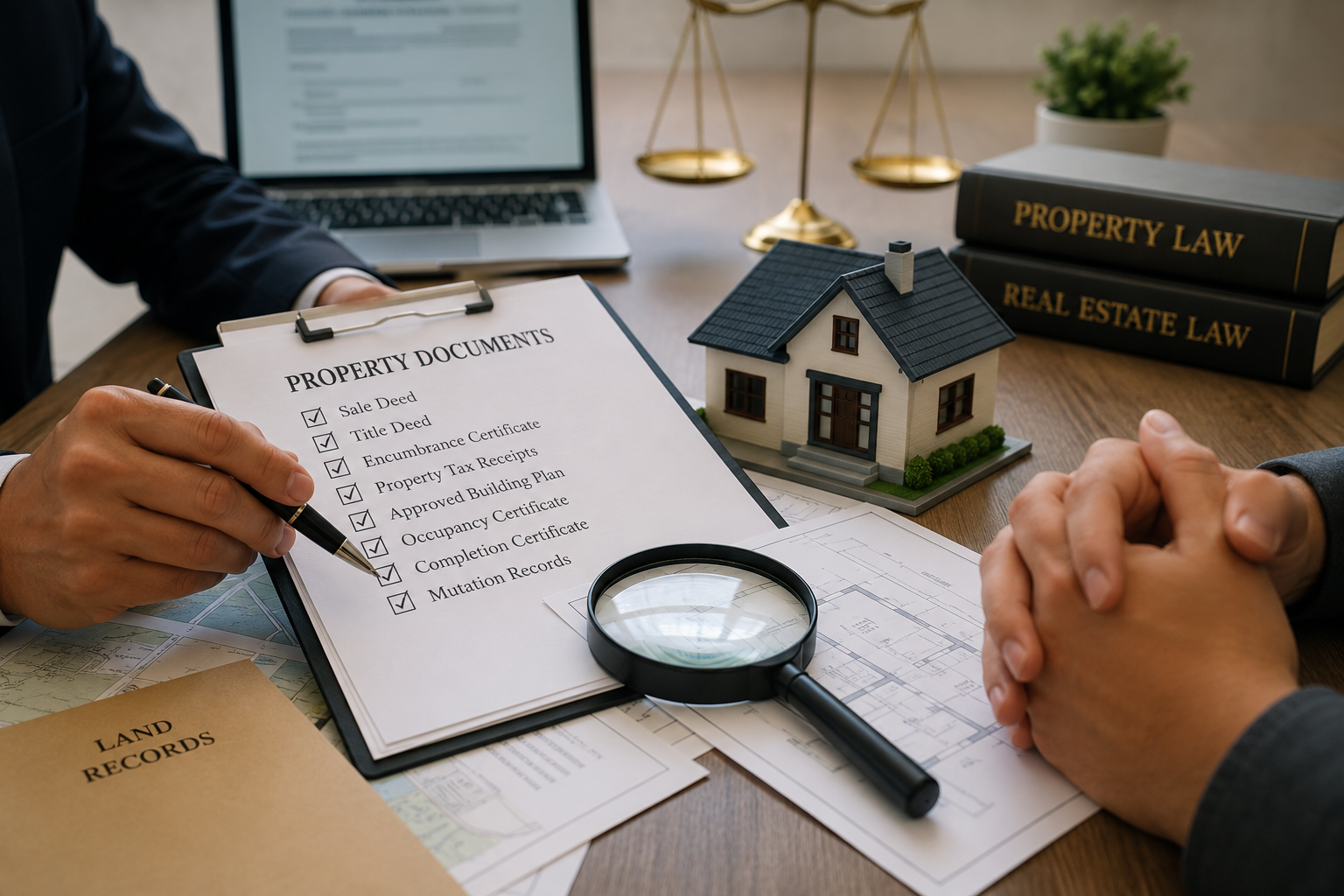
Essential Property Documents to Verify
1. Sale Deed
The Sale Deed is the most important ownership document. It proves the transfer of ownership from the previous owner to the current owner.
Verify that:
The seller's name matches government records.
The property description is accurate.
The document is properly registered.
There are no alterations or suspicious modifications.
Always inspect the original Sale Deed rather than relying solely on photocopies.
2. Title Deed
The Title Deed establishes legal ownership of the property.
A clear title means:
The seller has complete ownership rights.
No other individual has ownership claims.
The property can legally be transferred.
If multiple owners exist, ensure all owners consent to the sale.
3. Encumbrance Certificate (EC)
An Encumbrance Certificate confirms whether the property has any financial or legal liabilities.
It reveals:
Existing home loans
Mortgages
Court attachments
Registered claims
Previous transactions
A property with a clean Encumbrance Certificate is generally safer to purchase.
4. Property Tax Receipts
Request recent property tax receipts to confirm:
Taxes have been paid regularly.
No outstanding municipal dues exist.
Property records match the seller's information.
Unpaid taxes may become the buyer's responsibility after purchase.
5. Approved Building Plan
For constructed properties, verify that the building plan has been approved by the competent municipal authority.
Compare:
Approved layout
Actual construction
Floor additions
Parking spaces
Unauthorized construction can result in penalties or demolition orders.
6. Occupancy Certificate (OC)
An Occupancy Certificate confirms that the building complies with approved plans and is fit for occupation.
Without an Occupancy Certificate, buyers may face difficulties obtaining:
Water connections
Electricity services
Home loans
Property resale approvals
7. Completion Certificate (CC)
The Completion Certificate confirms that construction has been completed according to sanctioned plans and applicable building regulations.
This document is especially important when purchasing newly constructed properties.
8. Mutation Records
Mutation records reflect the transfer of ownership in municipal or revenue records.
Verify that:
The seller's name appears correctly.
Property tax records have been updated.
Municipal records are consistent.
Mutation does not establish ownership but supports legal documentation.
9. Identity Proof of the Seller
Ensure the seller's identity matches all property documents.
Verify:
Aadhaar Card
PAN Card
Passport (if applicable)
Any mismatch should be investigated before proceeding.
Check for Pending Litigation
Conduct a legal search to determine whether the property is involved in:
Civil disputes
Ownership conflicts
Family partition cases
Court injunctions
Government acquisition proceedings
Buying a disputed property may lead to prolonged litigation.
Verify Bank Loan Status
If the property has an existing home loan:
Obtain a No Objection Certificate (NOC) from the bank.
Confirm that the outstanding loan will be cleared before registration.
Ensure the original title documents are released by the lender.
Never purchase a property with unresolved financial liabilities.
Verify RERA Registration
If purchasing a new property from a builder, verify whether the project is registered under the Real Estate (Regulation and Development) Act (RERA).
RERA registration helps buyers verify:
Project approvals
Construction status
Delivery timelines
Builder details
Legal compliance
Conduct a Physical Inspection
Legal documents alone are not sufficient.
Inspect the property to verify:
Actual boundaries
Access roads
Encroachments
Existing occupants
Utility connections
A site visit often reveals issues that documents may not disclose.
Engage a Property Lawyer
Property transactions involve complex legal documentation. An experienced property lawyer can:
Verify ownership documents
Conduct title searches
Identify legal risks
Review sale agreements
Ensure compliance with applicable laws
Protect buyers from fraud
Professional legal assistance significantly reduces the risk of future disputes.
Common Red Flags to Watch For
Avoid proceeding if you notice:
Missing original documents
Seller refusing document verification
Multiple ownership claims
Extremely low purchase price
Pending court cases
Unapproved construction
Inconsistent property descriptions
Pressure to complete the transaction quickly
These warning signs often indicate potential legal complications.
Conclusion
Property purchases require more than financial planning—they demand careful legal verification. Checking ownership records, title documents, approvals, tax receipts, and litigation history can protect buyers from costly mistakes.
Before investing in any property, conduct thorough due diligence and seek professional legal advice. A few extra days spent verifying documents can save years of legal disputes and financial hardship.
If you're planning to purchase property in India, consulting an experienced property lawyer can help ensure your investment is legally secure and free from hidden risks.