
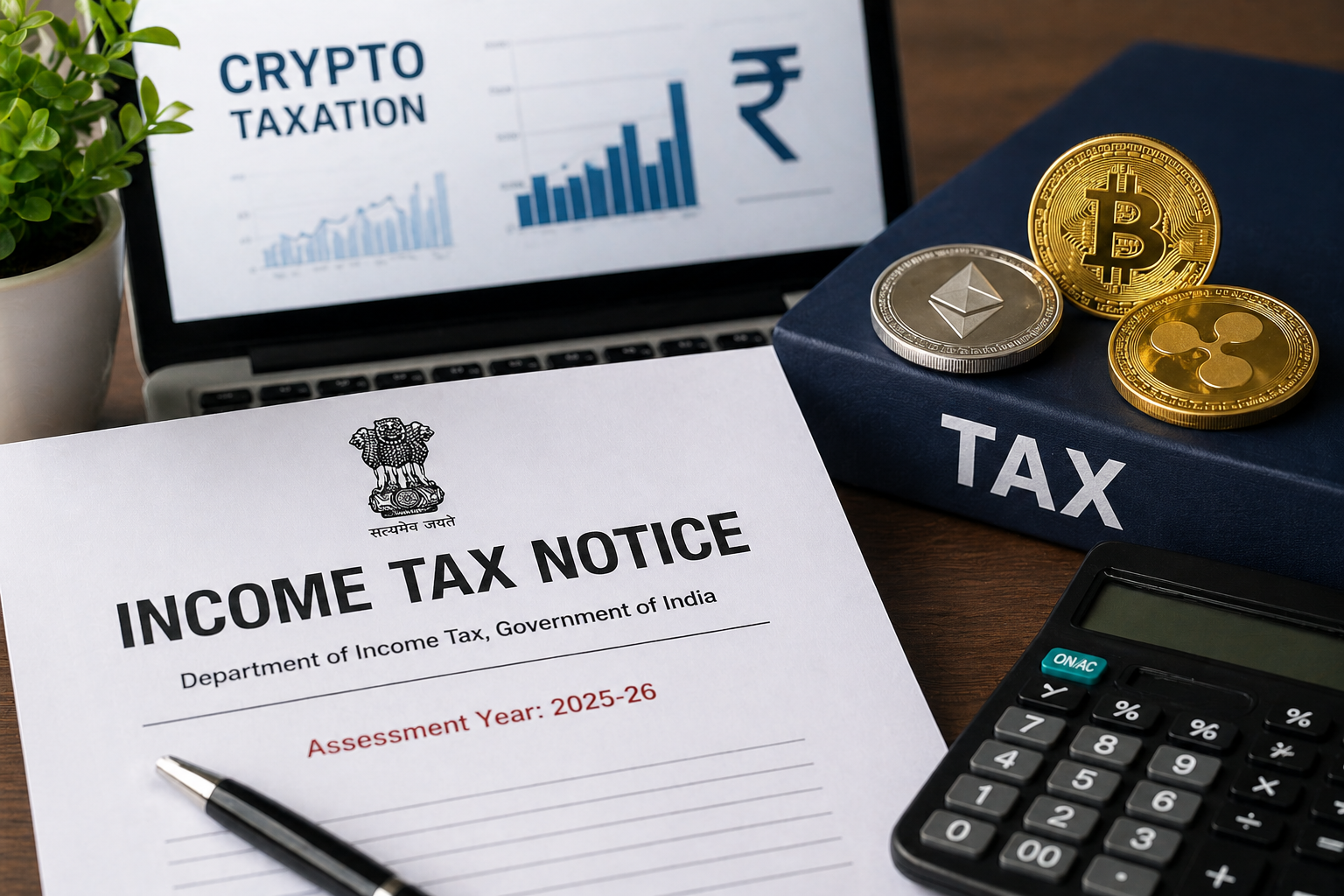
Cryptocurrency transactions in India are now under close scrutiny by the Income Tax Department. With the rise of digital assets like Bitcoin, Ethereum, and Tether, tax authorities have become more active in monitoring trading activity, profit declarations, and compliance.
If you have received an income tax notice related to your crypto transactions, it is important to act carefully and understand your legal obligations. Ignoring such a notice can lead to penalties, scrutiny, or even prosecution in serious cases.
This guide explains what an income tax notice for crypto means, why you may receive one, and what steps to take next.
Why Are People Receiving Income Tax Notices for Crypto?
In India, cryptocurrency is treated as a Virtual Digital Asset (VDA) under the Income Tax Department tax framework. Since 2022, crypto taxation rules have become stricter.
Common reasons for receiving a notice include:
1. Unreported Crypto Gains
If you sold crypto and made profits but did not declare them in your Income Tax Return (ITR), authorities may flag your account.
2. Mismatch in Financial Records
Your bank records, exchange transactions, and tax filings may not match.
3. Large Volume Transactions
High-value deposits or withdrawals linked to crypto exchanges can trigger scrutiny.
4. TDS Mismatch
A 1% Tax Deducted at Source (TDS) on certain crypto transfers may reveal undeclared transactions.
5. Suspicious International Transfers
Transactions involving offshore wallets or foreign exchanges may invite additional questions.
Types of Crypto Tax Notices in India
Not every tax notice means you are in serious trouble. Different notices serve different purposes.
Defective Return Notice
This means your ITR may have missing or incorrect information.
Scrutiny Notice
Authorities want more details about your crypto transactions.
Reassessment Notice
If the department believes income has escaped taxation, they may reopen old tax records.
Demand Notice
You may be asked to pay pending tax, interest, or penalties.
Understanding the type of notice is the first step toward responding properly.
What to Do After Receiving a Crypto Tax Notice
1. Read the Notice Carefully
Do not panic. Review:
Assessment year
Section under which notice was issued
Deadline for response
Required documents
Every notice has legal significance.
2. Collect Your Crypto Transaction History
Gather complete records from all exchanges and wallets.
This includes:
Buy and sell history
Profit/loss reports
Wallet transfer records
Deposit and withdrawal statements
TDS certificates
Platforms often provide downloadable reports.
3. Match with Bank Statements
Tax authorities often compare banking activity with crypto exchange records.
Check for:
Fiat deposits
Withdrawals
Transfer patterns
Foreign remittances
Consistency matters.
4. Calculate Tax Liability
In India, crypto profits are generally taxed at a flat rate under VDA taxation rules.
You should calculate:
Total gains
Tax due
Interest (if delayed)
Possible penalties
Proper calculation reduces future complications.
5. Consult a Tax Lawyer or Chartered Accountant
Crypto taxation can be complex, especially if:
You traded on multiple exchanges
You used foreign platforms
You transferred assets between wallets
You dealt in P2P trades
Professional advice can help avoid mistakes.
Can You Ignore a Crypto Tax Notice?
No.
Ignoring an income tax notice can make matters worse.
Possible consequences include:
Financial penalties
Additional interest
Bank account scrutiny
Detailed audit
Legal proceedings
Even if you believe the notice was sent by mistake, respond properly.
What Documents May Be Required?
When replying, keep these ready:
PAN details
Income Tax Returns
Crypto exchange statements
Bank statements
Wallet addresses
Proof of source of funds
Transaction screenshots
TDS records
Complete documentation improves your defense.
What If You Used Foreign Crypto Exchanges?
Many users trade on global platforms.
Even if the exchange is outside India, tax liability may still apply if you are an Indian taxpayer.
Authorities may ask about:
Foreign asset holdings
Cross-border transfers
Offshore wallets
International remittances
Failure to disclose foreign digital assets can create additional compliance issues.
Common Mistakes Crypto Investors Make
Avoid these:
Not Maintaining Records
Crypto users often forget to preserve transaction logs.
Assuming Wallet Transfers Are Invisible
Blockchain transactions are traceable.
Ignoring Small Trades
Small profits are still taxable.
Using Multiple Accounts Without Proper Tracking
This complicates compliance.
Believing Crypto Is Tax-Free
This misconception causes major legal problems.
How to Stay Compliant in Future
To avoid future notices:
Maintain detailed transaction records
File accurate tax returns
Declare all gains honestly
Track TDS deductions
Report foreign holdings where required
Work with tax professionals if needed
Good compliance reduces risk.
Final Thoughts
Receiving an income tax notice for crypto transactions does not automatically mean wrongdoing. In many cases, it is simply a request for clarification or correction.
The key is to act quickly, gather accurate records, calculate your liability, and respond within the deadline.
As crypto regulation continues to evolve in India, taxpayers should treat digital asset transactions with the same seriousness as traditional investments.
Whether you trade Bitcoin, hold Ethereum, or use stablecoins like Tether, tax compliance is now an essential part of crypto investing.
If you receive a notice, timely legal and tax guidance can make the process much smoother.