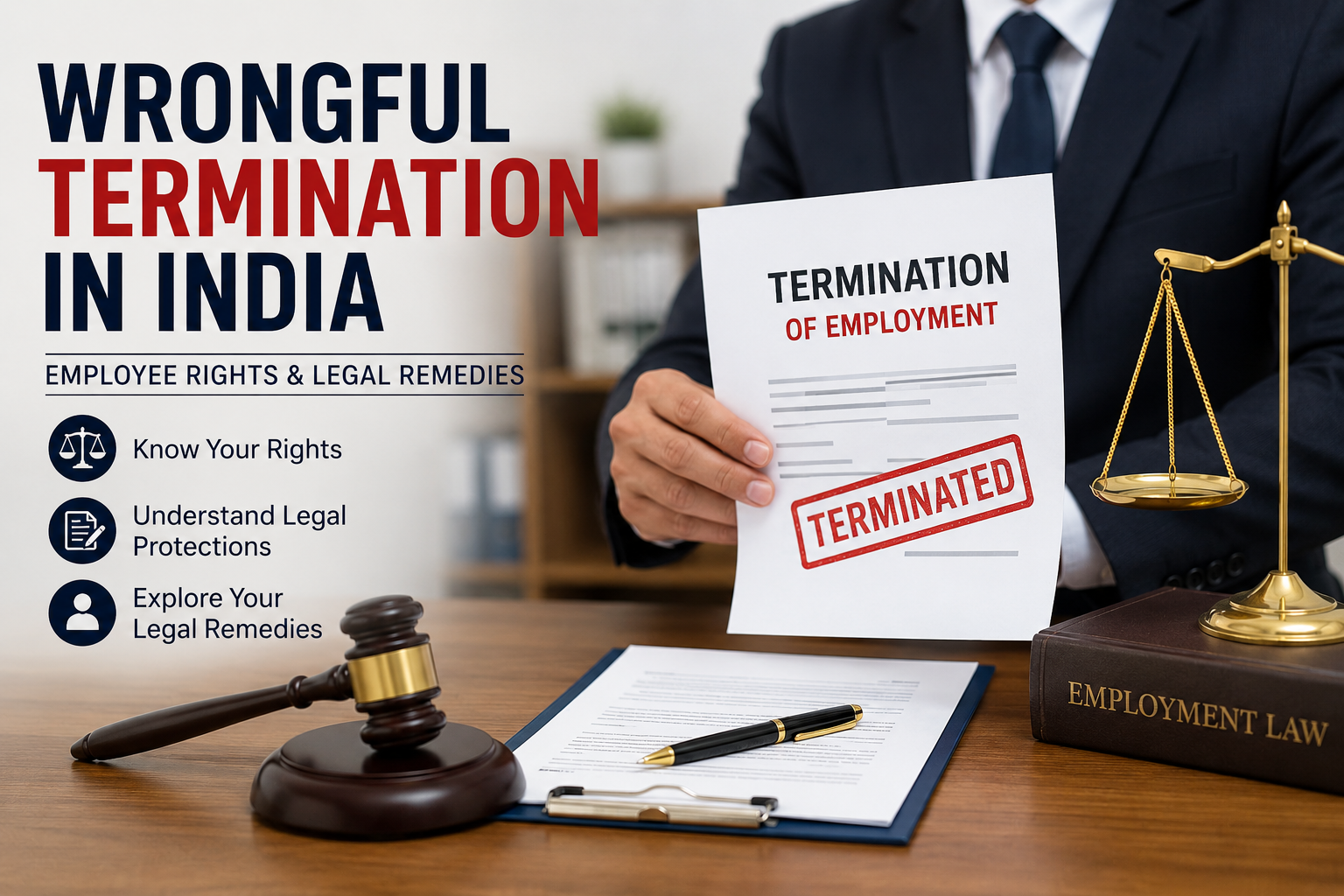
Losing a job unexpectedly can be stressful, especially when the termination appears unfair or unlawful. While employers have the right to terminate employees under certain circumstances, they must follow the applicable employment laws, employment contracts, and principles of natural justice. If they fail to do so, the dismissal may amount to wrongful termination.
Understanding your employee rights in India is essential if you believe your employment has been terminated illegally. This guide explains what wrongful termination means, common situations where it occurs, the legal remedies available, and the steps employees can take to protect their rights.
What Is Wrongful Termination?
Wrongful termination refers to the unlawful dismissal of an employee in violation of:
Employment contracts
Labour laws
Company policies
Constitutional protections (for government employees)
Principles of natural justice
Simply put, an employer cannot terminate an employee arbitrarily if the law or employment agreement requires a valid reason or a fair procedure.
Is Wrongful Termination Illegal in India?
Yes. Indian employment laws protect employees against illegal or unfair dismissal in many situations. However, the legal protections available depend on factors such as:
Whether the employee works in the public or private sector
The terms of the employment contract
Applicable labour laws
The employee's designation and role
The reason for termination
Different rules may apply to workmen covered under labour legislation and managerial employees governed primarily by employment contracts.
Common Examples of Wrongful Termination
An employee may have grounds to challenge termination if they are dismissed under circumstances such as:
1. Termination Without Following Due Process
Many organizations have disciplinary procedures that include:
Show-cause notices
Internal inquiries
Opportunity to explain
Domestic investigations
Ignoring these procedures may make the termination legally questionable.
2. Discrimination
An employer should not terminate an employee solely because of:
Gender
Religion
Caste
Disability
Pregnancy
Race
Discriminatory dismissals may violate constitutional principles and applicable laws.
3. Retaliatory Termination
Employees should not be punished merely because they:
Report workplace harassment
File legal complaints
Report corruption
Participate in lawful investigations
Raise genuine workplace concerns
4. Breach of Employment Contract
If an employment contract specifies notice periods, disciplinary procedures, or severance obligations, the employer should generally comply with those terms.
5. Forced Resignation
Sometimes employees are pressured into resigning rather than being formally terminated.
If a resignation is obtained through coercion, intimidation, or undue pressure, legal remedies may be available depending on the facts.
Valid Reasons for Employee Termination
Not every termination is illegal.
Employers may lawfully terminate employment for reasons such as:
Serious misconduct
Poor performance (after following appropriate procedures)
Company restructuring
Redundancy
Business closure
Violation of company policies
Fraud or criminal misconduct
The legality often depends not only on the reason but also on whether the employer followed the proper procedure.
Employee Rights After Wrongful Termination
Employees may have several rights depending on the applicable law and employment terms.
These may include:
Right to Notice
Many employees are entitled to advance notice or salary in lieu of notice, depending on their contract and applicable laws.
Right to Final Settlement
Employees are generally entitled to receive dues such as:
Pending salary
Leave encashment (where applicable)
Bonuses, if contractually payable
Gratuity, subject to eligibility
Provident Fund benefits
Right to Fair Hearing
Where disciplinary action is involved, employees are often entitled to an opportunity to respond before a final decision is made.
Right to Challenge Illegal Termination
Employees may challenge wrongful termination before the appropriate authority or court, depending on the nature of their employment and applicable legal provisions.
Legal Remedies Available
If you believe your termination was unlawful, possible legal remedies may include:
Filing a Complaint Before Labour Authorities
Employees covered under labour laws may approach the appropriate labour authorities or labour courts for relief.
Civil Suit for Breach of Contract
Managerial or senior employees may, in appropriate cases, pursue remedies based on breach of their employment contract.
Constitutional Remedies
Government employees may have additional legal protections under constitutional and administrative law.
Compensation
Depending on the facts and the decision of the competent authority, relief may include compensation, unpaid dues, or other remedies available under law.
Steps to Take After Wrongful Termination
If you suspect your termination was illegal, consider taking the following steps:
Collect Important Documents
Keep copies of:
Employment contract
Appointment letter
Salary slips
Termination letter
Emails and official communications
Performance reviews
HR correspondence
These documents may be useful if legal proceedings become necessary.
Understand the Reason for Termination
Review the termination letter carefully and determine whether the employer has provided a clear and legitimate reason.
Avoid Signing Documents Without Understanding Them
Some employers may ask employees to sign settlement agreements or resignation letters.
Read all documents carefully before signing and seek legal advice if necessary.
Consult an Employment Lawyer
An experienced employment lawyer can assess:
Whether the termination appears lawful
Available legal remedies
Applicable limitation periods
The most appropriate forum for your case
Can You Receive Compensation?
Compensation depends on the specific facts of each case, the applicable law, and the decision of the relevant authority or court. Relief may vary and can include payment of lawful dues or other remedies where the termination is found to be unlawful.
Because outcomes differ from case to case, obtaining legal advice based on your individual circumstances is important.
Tips for Employers
Employers can reduce the risk of wrongful termination disputes by:
Maintaining clear employment contracts
Following disciplinary procedures
Documenting employee performance
Conducting fair internal investigations
Issuing proper notices where required
Complying with applicable labour laws
Treating employees consistently and fairly
A transparent process benefits both employers and employees.
Conclusion
Wrongful termination can have significant financial and emotional consequences for employees. Understanding your legal rights is the first step toward determining whether a dismissal was lawful and what remedies may be available. While employers have the authority to terminate employment in appropriate circumstances, they must do so in accordance with employment contracts, applicable labour laws, and fair procedures.
If you believe you have been wrongfully terminated, gather all relevant documents, understand the reasons given for your dismissal, and seek legal advice promptly. Taking informed action can help you protect your rights and explore the legal options available under Indian law.